What is Lithium Polymer Battery?
Ultimate Guide 2026
Table of Contents
Quick Answer
Lithium polymer battery (LiPo) is a rechargeable lithium-ion battery that uses a polymer-based electrolyte instead of a liquid electrolyte.
This design allows LiPo batteries to be thinner, lighter, and shaped in flexible form factors compared with cylindrical lithium-ion cells.
They are widely used in smartphones, drones, and RC devices but require proper charging and protection due to higher sensitivity to overcharge and damage.
Brief history of Lithium Polymer Battery
Lithium polymer batteries first emerged in the late 1990s as a variation of lithium-ion technology using polymer electrolytes.
They began commercial adoption in the early 2000s, especially in mobile phones and consumer electronics requiring thin, lightweight batteries.
Wider use followed as manufacturing improved and demand grew for flexible battery shapes and higher energy density.
Chemistry and Construction
Lithium ion polymer battery chemistry is based on lithium-ion electrochemical reactions, typically using lithium cobalt oxide, NMC, or similar cathode materials with a graphite anode.
Instead of a liquid electrolyte, rechargeable LiPo batteries use a gel or polymer electrolyte that allows ion transport while enabling thin, lightweight construction.
This construction uses stacked or laminated electrode layers sealed in a flexible aluminum pouch, which reduces weight but requires careful protection against swelling and damage.
Do lithium polymer batteries have a memory?
Lithium polymer li poly batteries do not have a memory effect, unlike older nickel-cadmium batteries.
They can be recharged at any state of charge without reducing usable capacity or performance.
Key Technical Specifications
The voltage of a single rechargeable 3.7v LiPo batteries cell depends on its chemistry and varies from about 4.2 V (fully charged) to about 2.7–3.0 V (fully discharged). The nominal voltage is 3.6 or 3.7 volts.
Lithium ion polymer battery capacity refers to the amount of electrical charge the battery can store, typically measured in milliamp-hours (mAh) or amp-hours (Ah).
Actual usable capacity depends on discharge rate, cutoff voltage, temperature, and battery age.
Higher capacity LiPo batteries provide longer runtime but usually increase physical size and weight.
What does the C rating on a lithium polymer battery indicate?
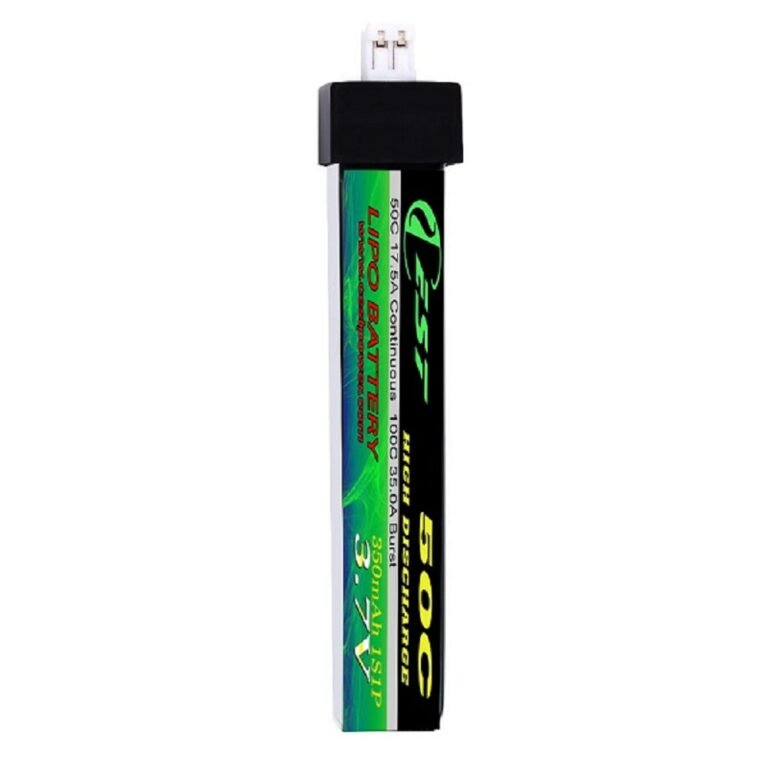
The C rating on a polymer lithium battery indicates the maximum safe continuous and peak discharge current relative to its capacity.
For example, a 2000 mAh battery LiPo rated at 20C can theoretically deliver 40 A (2.0 Ah × 20).
Higher C ratings allow greater power output but usually increase heat generation and stress on the battery.
What is a good IR for a LiPo battery?
A good internal resistance (IR) for a rechargeable battery LiPo is typically in the low milliohm (mΩ) range, often below 20 mΩ per cell for high-quality, high-discharge packs.
Lower IR means less voltage drop, higher efficiency, and reduced heat generation under load.
IR increases with age, high cycle count, or improper storage, so values should be compared for the same cell type and capacity.
Advantages and Disadvantages
Lithium polymer batteries offer advantages such as high energy density, lightweight construction, and flexible form factors that enable thin and compact device designs.
Their disadvantages include higher sensitivity to overcharge, physical damage, and swelling, which requires strict protection and careful handling.
Compared with rigid lithium-ion cells, LiPo batteries often have shorter cycle life and higher cost for equivalent capacity.
What is the energy density of lithium polymer battery?
The energy density of a battery lithium polymer (LiPo) typically ranges from about 150 to 350 Wh/kg, depending on cell design and chemistry.
Its volumetric energy density is generally comparable to or slightly lower than cylindrical lithium-ion cells due to pouch construction.
Actual energy density varies with electrode materials, thickness, and safety margins used in the battery design.
How many cycles do lithium polymer batteries last?
Lithium polymer batteries typically last about 300 to 500 full charge–discharge cycles before their capacity drops to around 80% of the original rating.
Cycle life depends strongly on depth of discharge, charge voltage, temperature, and discharge rate.
Using partial cycles and avoiding overcharge, deep discharge, and high heat can significantly extend LiP battery lifespan.
Are lithium polymer batteries safe?
Lithium polymer batteries are generally safe when properly designed, charged, and protected with appropriate battery management and protection circuits.
They are more sensitive to overcharging, puncture, and mechanical damage than metal-cased lithium-ion cells, which can increase fire risk if misused.
Using correct chargers, avoiding physical stress, and maintaining proper temperature control are essential for safe operation.
Charge and Discharge
Lithium polymer batteries use a constant-current/constant-voltage (CC/CV) charging method, typically charging to 4.2 V per cell unless otherwise specified by the manufacturer.
Discharge should stay within the rated current and above the minimum cutoff voltage, usually around 3.0 V per cell, to prevent damage.
Overcharging, deep discharging, or exceeding temperature limits can significantly reduce LiP battery life and safety.
How to properly charge and own a LiPo battery?
To properly charge a battery LiPo, use a LiPo-specific charger with a CC/CV profile and never exceed the manufacturer’s specified charge voltage, typically 4.2 V per cell.
During ownership, avoid deep discharge, high temperatures, and physical damage, and store LiPo batteries partially charged (around 40–60%) in a cool, dry place.
Regularly inspect for swelling or damage and stop using the battery immediately if abnormal heat, odor, or deformation is observed.
Which is better, 1C or 0.5C battery?
For LiPo batteries, a 0.5C charge rate is generally better for longevity because it generates less heat and reduces internal stress on the cells.
A 1C charge rate is safe for most LiPo batteries if specified by the manufacturer, but it can slightly accelerate capacity degradation over time.
Choose 0.5C when battery lifespan is the priority and 1C when faster charging is needed within rated limits.
What not to do with LiPo batteries?
Do not overcharge, over-discharge, puncture, crush, or expose LiPo batteries to high heat, as these actions can cause swelling, fire, or failure.
Never use damaged, swollen, or leaking LiPo batteries, and do not charge them unattended or with non-LiPo chargers.
Avoid short circuits, improper storage at full or empty charge, and operating outside the manufacturer’s specified voltage and temperature limits.
Can lithium polymer batteries explode?
Lithium polymer batteries can explode or catch fire in rare cases if they are overcharged, short-circuited, punctured, or exposed to extreme heat.
Because LiPo batteries use flexible pouch packaging, internal gas buildup from failure can lead to rapid swelling and rupture.
Proper chargers, protection circuits, and avoiding physical damage are essential to minimize explosion risk.
What is the shelf life of a lithium polymer battery?
The shelf life of a lithium-polymer battery is typically 2 to 5 years under proper storage conditions.
Capacity slowly declines over time due to chemical aging, even without charge–discharge cycles.
Safely Storage
To safely store lithium polymer (LiPo) batteries, keep them at about 40–60% state of charge, in a cool, dry, fire-resistant container, and away from heat, moisture, and physical damage.
Should LiPo batteries be stored fully charged?
LiPo batteries should not be stored fully charged, as high state of charge accelerates chemical aging and capacity loss.
For storage, a charge level of about 40–60% (around 3.7–3.85 V per cell) is recommended.
Storing LiPo batteries in a cool, dry environment further helps preserve performance and safety.
Do lithium polymer batteries degrade if not used?
High storage temperature and storing the battery fully charged significantly accelerate capacity loss and internal resistance increase.
Do lithium polymer batteries swell?
Yes, lithium polymer batteries can swell due to gas generation inside the pouch caused by aging, overcharging, over-discharge, or internal damage.
Swelling indicates electrolyte breakdown and increased internal resistance, which can compromise safety and performance.
A swollen LiPo li ion battery should be removed from service immediately and disposed of through proper battery recycling channels.
How to dispose of lithium polymer batteries?
To dispose of lithium polymer batteries safely, never throw them in household trash because they pose fire and environmental risks.
Take used or damaged LiPo batteries to certified battery recycling centers or local hazardous waste collection facilities.
Before disposal, discharge the battery if possible, tape the terminals, and store it in a non-conductive container to prevent short circuits.
Li Polymer Battery vs Lithium Ion Battery
Li polymer batteries and lithium-ion batteries use similar electrochemical principles but differ mainly in electrolyte form and packaging.
Lithium-ion batteries typically use liquid electrolyte in rigid metal cans, offering higher durability, while Li polymer batteries use polymer or gel electrolyte in lightweight pouch cells for thinner designs.
Li polymer batteries provide flexible shapes and lower weight, whereas lithium-ion batteries usually deliver longer cycle life and better mechanical protection.
Which is better, lithium polymer or lithium-ion?
Neither lithium polymer nor lithium-ion batteries are universally better; the choice depends on application requirements.
Lithium-polymer batteries are preferred for thin, lightweight, and custom-shaped devices, while lithium-ion batteries offer stronger mechanical protection and often longer cycle life.
Selecting the better option depends on priorities such as energy density, form factor, durability, and safety management.
Does lithium polymer last longer than lithium-ion?
Lithium-polymer batteries generally do not last longer than lithium-ion batteries in terms of cycle life.
Lithium-ion cells typically offer more charge–discharge cycles and better long-term durability due to their rigid metal casing.
LiPo batteries prioritize lightweight and flexible design, often at the cost of shorter lifespan under similar usage conditions.
Are lithium polymer batteries safer than lithium ion?
Lithium ion polymer batteries are not inherently safer than lithium-ion batteries; both use similar lithium-ion chemistry.
LiPo batteries lack a rigid metal casing, making them more vulnerable to puncture and swelling if mishandled, while lithium-ion cells offer better mechanical protection.
Overall safety depends more on cell quality, protection circuits, and proper use than on whether the battery is lithium polymer or lithium-ion.
Applications
Lithium ion polymer batteries are widely used in smartphones, tablets, laptops, and wearable electronics due to their thin, lightweight design.
They are also common in drones, RC vehicles, and robotics where high power output and flexible form factors are required.
Medical devices and compact industrial equipment use LiPo batteries when space, weight, and shape constraints are critical.
How do I choose the right LiPo battery?
To choose the right LiPo rechargeable battery, match the nominal voltage and cell count to your device’s operating requirements.
Select appropriate capacity and C rating based on required runtime and maximum discharge current.
Also consider physical size, weight, connector type, and whether the battery includes adequate protection for safe use.
How to Customize Lipo Battery?
To customize a LiPo rechargeable battery, define the required voltage, capacity, discharge rate (C rating), and physical dimensions based on the device design.
Cell chemistry, pouch shape, thickness, and connector type can be tailored to meet electrical and space constraints.
Customization should be done by qualified manufacturers to ensure proper protection circuitry, safety testing, and compliance with transport standards. Learn more about customize battery.
Frequently Asked Questions
Yes—a lithium polymer (Li-polymer or LiPo) battery is a type of lithium battery, specifically a lithium-ion battery that uses a polymer-based electrolyte instead of a liquid one.
To check the internal resistance of a LiPo li ion battery, use a battery internal resistance meter or charger with IR function, or calculate it by measuring the voltage drop under a known load and applying Ohm’s law (IR = ΔV / ΔI).
The 80% rule for LiPo batteries means limiting regular charge or discharge to about 20–80% state of charge, which reduces voltage stress and significantly extends cycle life.
Yes—LiPo batteries require a dedicated LiPo charger that uses a CC-CV charging profile with precise per-cell voltage control (typically 4.2 V per cell) and cell balancing, because generic chargers can overcharge and damage the battery.
Charging a lithium-polymer battery to 100% is safe when full capacity is needed, but for routine use keeping the charge around 80–90% reduces high-voltage stress and helps extend battery lifespan.
No—a polymer lithium ion battery should not be charged with a generic lithium-ion charger unless it explicitly supports LiPo chemistry and 4.2 V per cell with balancing, because improper voltage control can cause overcharge and safety risks.
Yes—lithium polymer batteries can be overcharged, and exceeding about 4.2 V per cell can cause cell swelling, overheating, capacity loss, and serious safety hazards, which is why precise charging control is essential.
On a LiPo battery, 30C or 50C indicates the maximum continuous discharge rate, meaning the battery can safely deliver 30× or 50× its capacity in amps (e.g., a 2 Ah pack at 30C ≈ 60 A).
To take care of a polymer lithium ion battery, avoid overcharging or deep discharge, keep it between ~20–80% state of charge for daily use, store at ~40–60% in a cool place, and never charge when swollen or overheated.
Lithium-polymer batterien swell when overcharging, deep discharge, overheating, aging, or internal damage causes electrolyte decomposition and gas buildup inside the sealed pouch, increasing internal pressure.
To put out a polymer lithium battery fire, use a Class D fire extinguisher, dry sand, or water to cool and suppress the fire, keep distance, and do not use CO₂ or foam, as they cannot stop thermal runaway.
To buy a battery lithium polymer (LiPo), choose well-known platforms or manufacturers’ official websites that provide clear specifications, safety certifications, and datasheets. Learn wholesale lithium polymer batteries