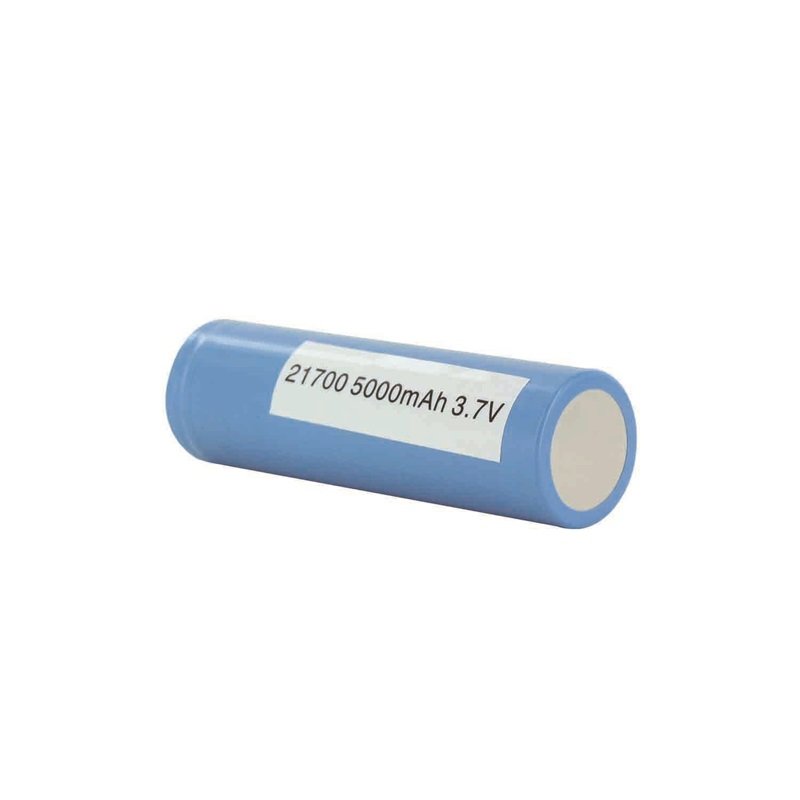
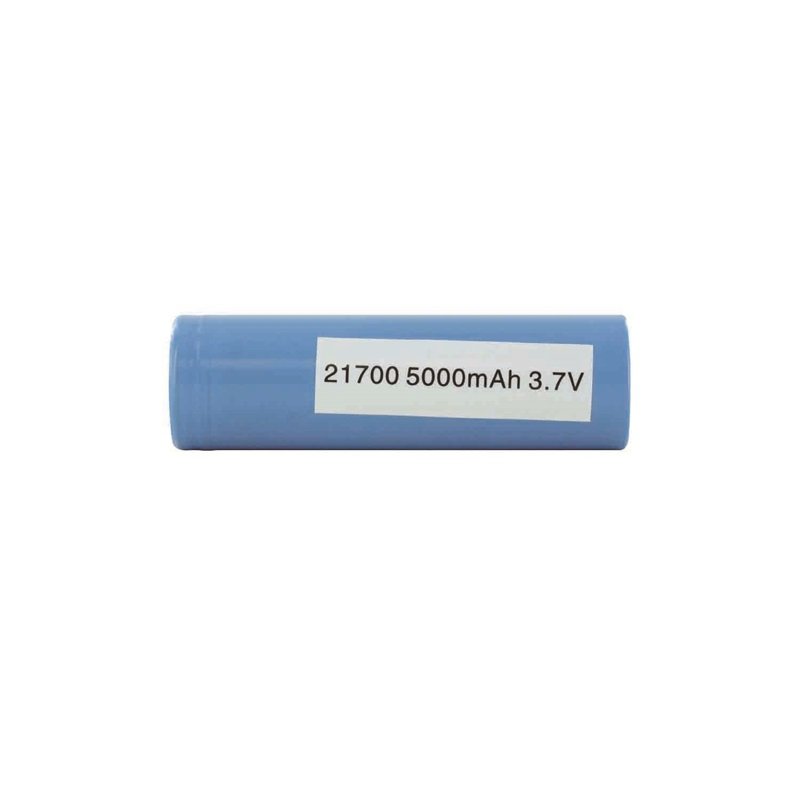

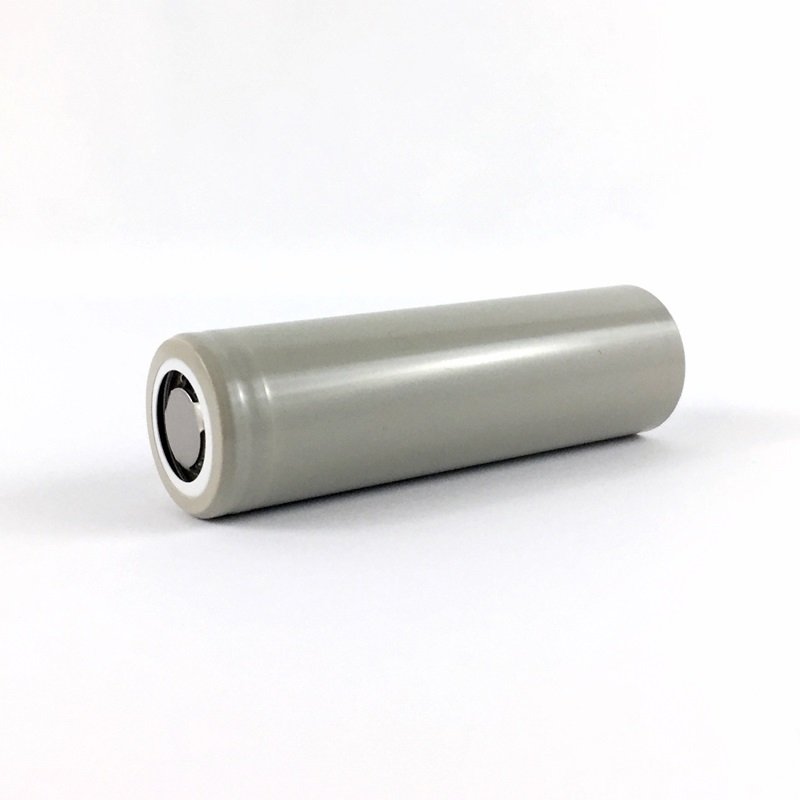
3.7V 21700 5000mAh 3C Rechargeable Lithium Ion Battery Flat Top INR21700
Summary of 21700 5000mAh 3C Li ion 3 7V Battery
The INR21700 5000mAh 3C lithium-ion cell is designed for applications where maximum energy density, long runtime, and stable pack scalability are the primary engineering goals. With an energy density of up to 257.14 Wh/kg, continuous discharge capability of 15A, and high cell-to-cell consistency, this model is suitable for multi-series and multi-parallel battery pack designs that prioritize endurance and lifecycle stability over extreme peak power.
INR21700 Battery 21700 5000mAh Specification
Model: INR21700
Rated Capacity: 5000mAh
Minimum Capacity: 4950mAh
Energy: 18Wh
Energy Density: 257.14Wh/kg
Rated voltage: 3.6V
Discharge Cut-off Voltage: 2.5V
Charge Cut-off Voltage: 4.2V
Cycle Life: More than 500 cycles
Dimensions: Φ21*70mm
Weight: 70g
Internal Resistance: Less than 18mΩ
Max Charge Current: 1C (5A)
Standard Discharge Current: 1C (5A)
Max Continuous Discharge Rate: 3C (15A)
Charging Temperature: 0 to 45℃;
Discharge Temperature: -20 to 60℃
Storage Temperature:
- -20℃~25℃: 12 months
- -20℃~45℃: 3 months
- -20℃~60 ℃: 1 month
Key Features – 21700 Battery 5000mAh
⚡ Energy Density: 257.14 Wh/kg (Measured at Cell Level)
High energy density is not a marketing number here—it directly translates to:
-
Fewer cells per pack for the same Wh target
-
Lower structural mass (holders, busbars, insulation)
-
Improved system-level gravimetric efficiency
Engineering implication:
In applications such as portable power stations, light EVs, and energy-biased battery modules, this cell reduces BOM complexity without sacrificing safety margins.
🔋 Capacity & Runtime Characteristics
Runtime behavior delivers flatter discharge curve compared with high-C cells, this cell is designed to deliver time, not bursts. For the same pack volume, runtime is measurably longer than 4000mAh or 3000mAh variants.
🔥 Continuous Discharge Capability: 15A (3C)
Rated for 15A continuous discharge, the cell maintains stable thermal performance when integrated into a properly cooled battery pack and does not require aggressive heat-sinking measures in standard pack designs.
🧩 Cell Consistency & Pack Scalability
One of the main engineering values of this model is batch consistency.
-
Tight capacity distribution
-
Controlled internal resistance spread
-
Lower balancing workload in BMS design
Pack-level conclusion:
This cell is suitable for high-series, high-parallel configurations, reducing imbalance risk and extending usable pack life.
♻️ Cycle Life & Degradation Profile
The cell delivers a cycle life of up to 500 cycles while retaining at least 4000 mAh of capacity under standard charge and discharge conditions, with a gradual and predictable degradation profile that simplifies state-of-health estimation.
🛡️ Safety & Reliability Considerations
-
INR chemistry with stable thermal response
-
Lower risk of sudden impedance rise
-
Compatible with mainstream BMS protection strategies
Engineering note:
Safety here is achieved via consistency and predictability, not extreme current tolerance.
🧠 Commonly Overlooked Points & Frequent Misconceptions
⚠️ Misconception 1: Higher capacity always means lower current
→ This cell still supports 15A continuous, sufficient for many mobility and storage applications.
⚠️ Misconception 2: High energy density cells are unsuitable for parallel packs
→ With proper matching, high-density cells often perform better in large parallel groups due to lower per-cell stress.
⚠️ Misconception 3: 3C cells are “low performance”
→ Performance must be defined by application, not C-rating alone.
📊 Specification Comparison & Selection Guidance
Parameter |
21700 3000mAh 15C |
21700 4000mAh 10C |
21700 4500mAh 5C |
21700 5000mAh 3C |
|---|---|---|---|---|
| Nominal Capacity | 3000mAh | 4000mAh | 4500mAh | 5000mAh |
| Continuous Discharge | 45A | 40A | 22.5A | 15A |
| Typical Internal Resistance | 18mΩ | 15mΩ | 18mΩ | 18mΩ |
| Weight | 63g | 68g | 68g | 70g |
| Best Use Case | Power tools, drones | Light EVs, drones | Balanced packs | Energy-focused packs, long runtime systems |
🔧 Selection Recommendation
-
Choose 3000mAh 15C for compact high-power tools
-
Choose 4000mAh 10C for mixed power & endurance
-
Choose 4500mAh 5C for balanced mobility platforms
-
Choose 5000mAh 3C when runtime, consistency, and lifecycle matter more than peak current
❓ Frequently Asked Questions (FAQ)
Q1: What are the pros and cons of 21700 batteries?
21700 batteries offer higher capacity, higher energy density, and better thermal performance than 18650 cells, enabling longer runtime or fewer cells per pack. Their main drawbacks are larger size, higher weight, and reduced compatibility with devices designed specifically for 18650 formats.
Q2: Which 21700 battery is best?
The “best” 21700 battery depends on your application: choose higher C-rate cells (e.g., 15C) for power-intensive needs and higher capacity cells (e.g., 5000 mAh) for long runtime and energy-focused systems. For balanced performance in general use, a mid-capacity (4000–4500 mAh) cell with moderate discharge capability often offers the optimal trade-off.
Q3: Can you mix 18650 with 21700?
No, 18650 and 21700 batteries should not be mixed in the same battery pack because they differ in size, capacity, and electrical characteristics, which can cause imbalance and safety risks. They may only be used together if each type is electrically isolated in separate packs with its own BMS, not within the same series or parallel group.
Q4: Does 21700 last longer than 18650?
Yes, a 21700 battery generally lasts longer than an 18650 because it typically has higher capacity and energy density, providing longer runtime under the same load. However, actual lifespan depends on cell quality, discharge rate, thermal management, and how the battery is charged and used.
Q5: How to store 21700 batteries?
Store 21700 batteries in a cool, dry place at around 20–25 °C with a partial charge of about 30–50% to minimize aging. Avoid high temperatures, direct sunlight, and storing them fully charged or fully depleted for long periods.
📞 Call to Action
If you’re evaluating 21700 5000mAh cells for a custom battery pack, cell consistency and load profile matter more than the label. Our engineering team can help review your application before final cell selection.
Related Battery
Samsung 21700 Battery Cell 4000mAh Lithium Ion
21700 4000mAh 10C Lithium Ion Battery INR21700 High Discharge Rate
21700 3000mAh 15C Lithium Ion Battery