

3.7V 22430 2000mAh 3C Lithium Ion Battery Cell
Summary of 22430 2000mAh 3C Battery Li-ion 3.7V
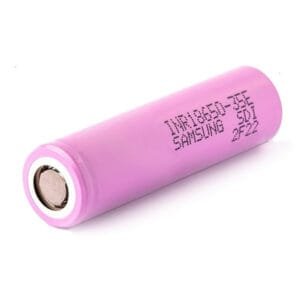
The 3.7V 22430 2000mAh 3C Lithium-Ion Battery Cell is a compact, high-performance cylindrical cell engineered for space-constrained and high-reliability applications. With an energy density up to 172.09 Wh/kg, continuous 3C discharge, and excellent cell-to-cell consistency, this battery is ideal for multi-series and multi-parallel battery pack designs. After 500+ deep charge-discharge cycles, the remaining capacity still exceeds 1600mAh, ensuring long-term value and stable performance.
Li Ion Battery 3 7V 22430 2000mAh Specification
Model: 22430
Rated capacity: 2000mAh
Energy: 7.4Wh
Energy Density: 172.09Wh/kg
Minimum Capacity: 1950mAh
Rated voltage: 3.7V
Discharge Cut-off Voltage: 2.75V
Charge Cut-off Voltage: 4.2V
Cycle Life: More than 500 cycles
Dimensions: Φ22*43mm
Weight: 43g
Internal Resistance: Less than 75mΩ
Standard Discharge Current: 0.2C (400mA)
Standard Charge Current: 0.2C (400mA)
Max Continuous Discharge Rate: 3C (6A)
Max Continuous Charge Current: 1C (2A)
Charging Temperature: 0 to 45℃;
Discharge Temperature: -20 to 65℃
Storage Temperature:
- -20℃~25℃: 12 months
- -20℃~45℃: 3 months
- -20℃~60 ℃: 1 month
Key Features – 22430 Lithium Battery 3 7V
🚀 High Energy Density for Maximum Runtime
With an energy density reaching 172.09Wh/kg, this 22430 lithium-ion cell delivers more usable energy in less space and weight. Compared with conventional cylindrical cells, it allows device manufacturers to extend runtime without increasing battery size, making it especially suitable for portable, handheld, and lightweight equipment.
🔥 Stable 3C Continuous Discharge Performance
Designed for demanding power requirements, the cell supports continuous 3C discharge, delivering up to 6A of stable output current. This ensures reliable operation in devices with sustained power draw, minimizing voltage sag and thermal stress during extended use.
🧩 Excellent Cell Consistency for Battery Pack Integration
Each cell undergoes strict matching and quality control to ensure high consistency in capacity, internal resistance, and voltage behavior. This makes the 22430 cell particularly well-suited for multi-series and multi-parallel battery packs, improving overall pack safety, lifespan, and balance efficiency.
📏 Compact 43mm Height for Space-Sensitive Designs
With a height of just 43mm, this 22430 lithium-ion cell is significantly more compact than many traditional cylindrical cells. It is an excellent choice for applications with strict dimensional constraints, enabling more flexible mechanical design and higher packing efficiency.
♻️ Long Cycle Life with Reliable Capacity Retention
The cell is engineered for 500+ deep charge-discharge cycles, and even after 500 cycles, it retains more than 1600mAh of usable capacity. This long cycle life reduces replacement frequency, lowers maintenance costs, and improves the overall sustainability of battery-powered systems.
❓ Frequently Asked Questions (FAQ)
Q1: What is a 3C battery?
A 3C battery is a battery that can safely deliver a continuous discharge current equal to three times its rated capacity. For example, a 2000mAh 3C battery can continuously output up to 6A without damaging the cell.
Q2: How many hours can 2000mAh last?
Q3: Does a new battery need to be fully charged?
Q4: Can you overcharge a new battery?
Q5: What not to do with a lithium battery?