
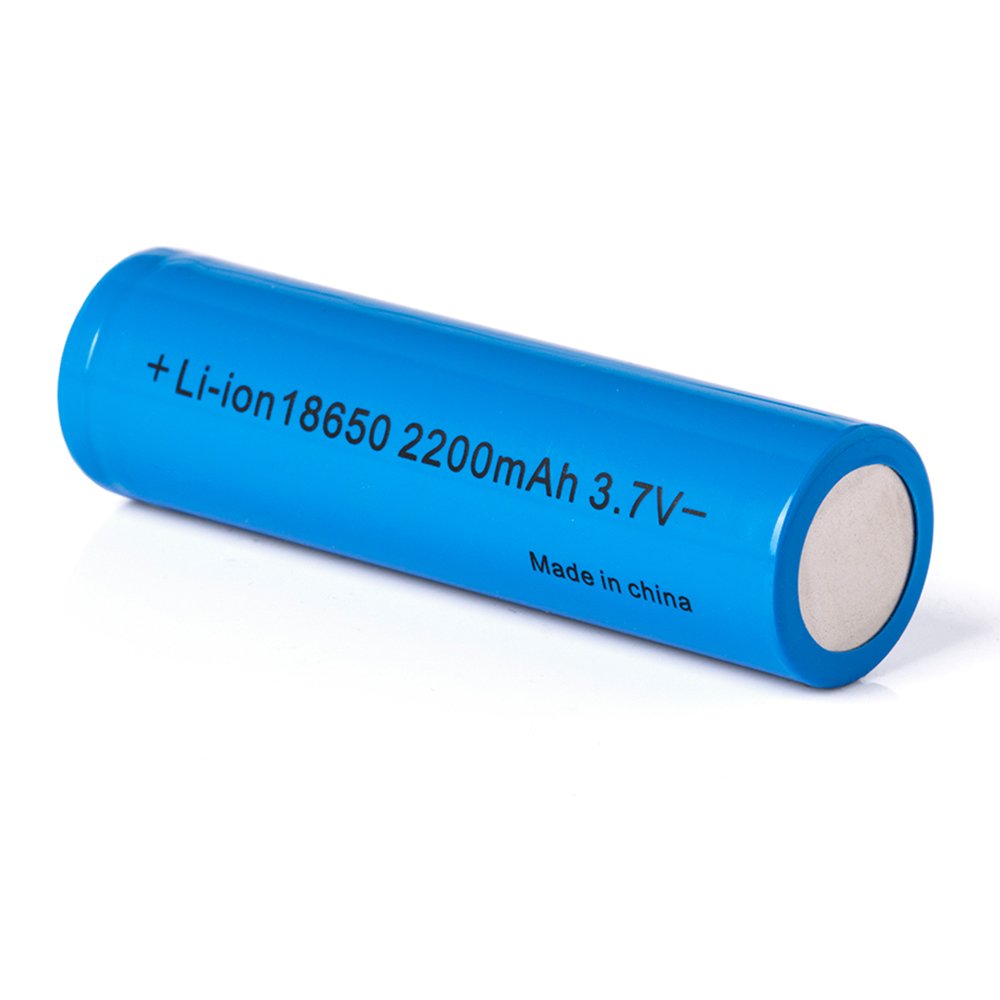

3.7V Lithium Ion Battery Cell 18650 2200mAh 8C
Summary of 18650 2200mAh 8C ICR 18650 Battery
The 3.7V 18650 2200mAh 8C lithium-ion battery delivers a balanced combination of high power output, stable capacity, and long cycle life in a standard 18650 form factor. With an 8C continuous discharge rate (up to 17.6A), low internal resistance, and reliable thermal performance, it is well suited for power tools, e-bikes, RC models, and other motor-driven or high-current applications. Certified to UN38.3, IEC 62133, RoHS, and MSDS standards, this cell ensures safety, compliance, and easy integration into OEM battery packs when combined with proper cell matching and BMS protection.
18650 Lithium Ion Rechargeable Battery Specification
Model: Lithium Rechargeable Batteries
Rated Capacity: 2200mAh
Energy: 8.14Wh
Energy Density: 180.89Wh/kg
Minimum Capacity: 2150mAh
Rated voltage: 3.7V
Discharge Cut-off Voltage: 2.75V
Charge Cut-off Voltage: 4.2V
Cycle Life: More than 500 cycles
Dimensions: Φ18*65mm
Weight: 45g
Internal Resistance: Less than 20mΩ
Standard Discharge Current: 0.2C (440mA)
Standard Charge Current: 0.2C (440mA)
Max Continuous Discharge Rate: 8C (17.6A)
Max Continuous Charge Current: 1C (2.2A)
Charging Temperature: 0 to 45℃;
Discharge Temperature: -20 to 65℃
Storage Temperature:
- -20℃~25℃: 12 months
- -20℃~45℃: 3 months
- -20℃~60 ℃: 1 month
Key Features
✅ High Power Output
The 8C discharge rating allows continuous current draw up to 17.6A, supporting devices with significant energy demands.
🔋 Reliable Capacity
2200mah rechargeable battery is sufficient for medium-duty applications, balancing runtime and power delivery.
♻️ Rechargeable with Long Cycle Life
Lithium-ion chemistry enables hundreds of reliable charge-discharge cycles.
🔒 Thermal Stability and Low Self-Discharge
Safe operation with reduced risk of overheating and extended shelf life.
⚡ Compact and Lightweight
Ideal for portable electronic designs where space and weight are limited.
Due to the powerful performance and standard 18650 format, the 18650 battery 3.7 v 2200mAh is widely used in:
🔦 LED Flashlights & Tactical Torches
🛠 Cordless Power Tools
🛴 Electric Scooters & E-bikes
🚁 RC Cars and Drones
🔋 Battery Packs for DIY Projects
📡 Wireless Devices and IoT Sensors
Its high discharge capacity makes it especially suitable for motor-driven and pulse-current-demanding applications.
Cell Matching & Battery Pack Integration
When assembling battery packs for tools, e-bikes, or robotics, cell matching is essential. Always choose:
-
Cells from the same manufacturer and batch
-
Cells with identical capacity, voltage, and internal resistance
-
Use a Battery Management System (BMS) for:
-
Overcharge protection
-
Over-discharge protection
-
Short-circuit prevention
-
Cell balancing
-
❓ FAQ – Frequently Asked Questions
Q1: How long does it take to charge a 2200mAh battery?
Q2: Is it bad to keep lithium batteries fully charged?
Q3: How long will 2200mAh last?
Q4: Can you over-discharge an 18650 battery?
Q5: How to tell if a lithium battery is overcharged?
3.7V 18650 3000mAh Lithium Ion Battery Cell 5C 500 Cycles
ICR18650 Lithium Ion Battery Cell 3.7V 18650 2000mAh 15C