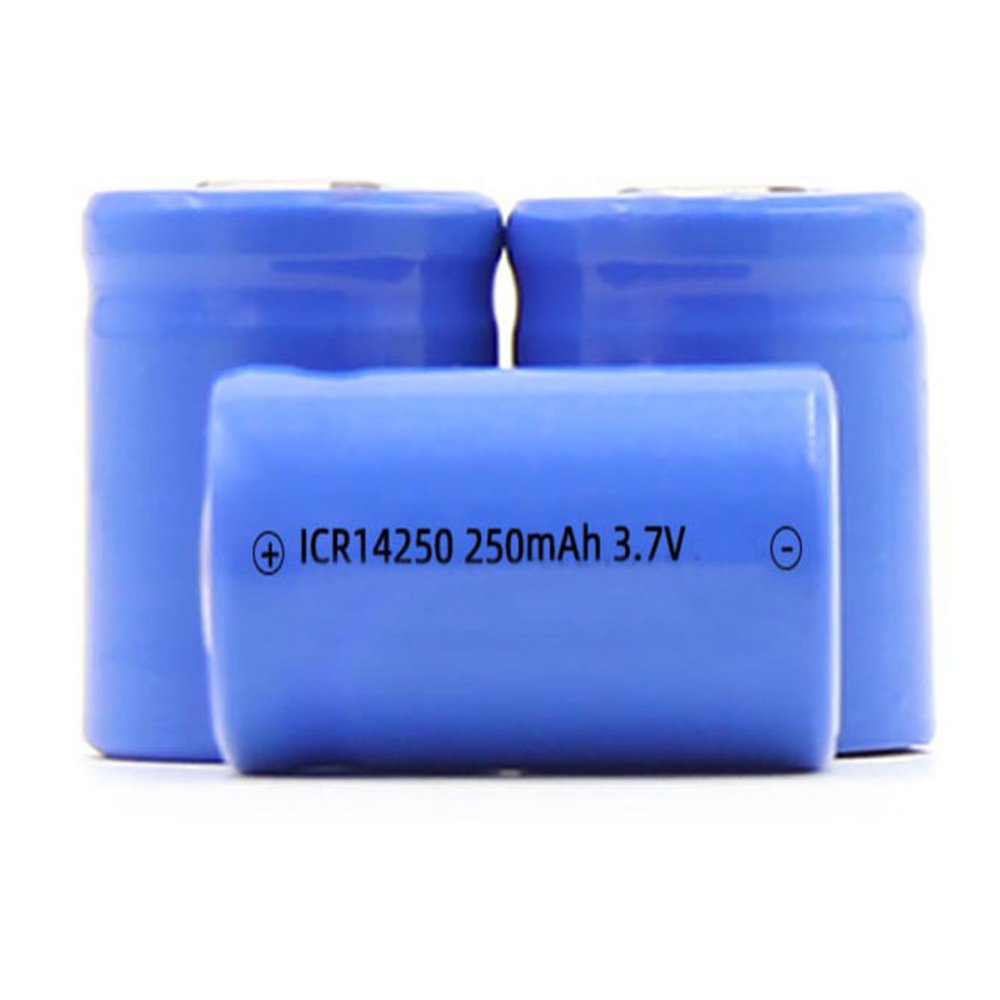
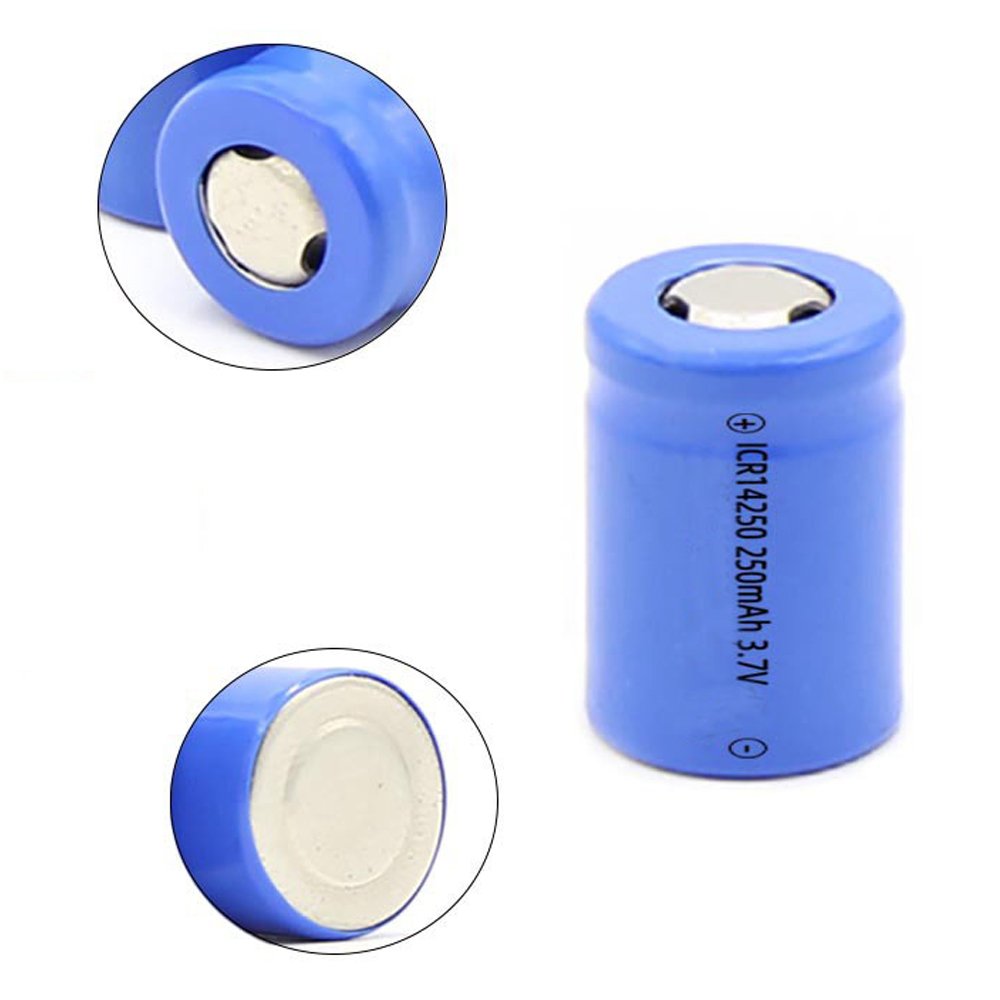
1/2 AA 3.7V 14250 250mAh 3C Lithium Ion Battery Cell
Summary of 14250 250mAh 3C Li ion 3 7V Battery
The 1/2 AA Rechargeable 3.7V 14250 250mAh 3C Lithium-Ion Battery Cell is a compact, lightweight, and high-stability power solution designed for devices with strict size and weight constraints. Featuring eco-friendly rechargeable chemistry, no memory effect, ultra-low self-discharge, and excellent voltage stability under high load, this 14250 Li-ion cell delivers reliable energy where precision and performance matter most.
14250 Battery 3.7 V 250mAh Specification
Model: 14250
Rated capacity: 250mAh
Energy: 0.925Wh
Energy Density: 102.78Wh/kg
Minimal Capacity: 240mAh
Rated voltage: 3.7V
Discharge Cut-off Voltage: 2.75V
Charge Cut-off Voltage: 4.2V
Cycle Life: More than 500 cycles
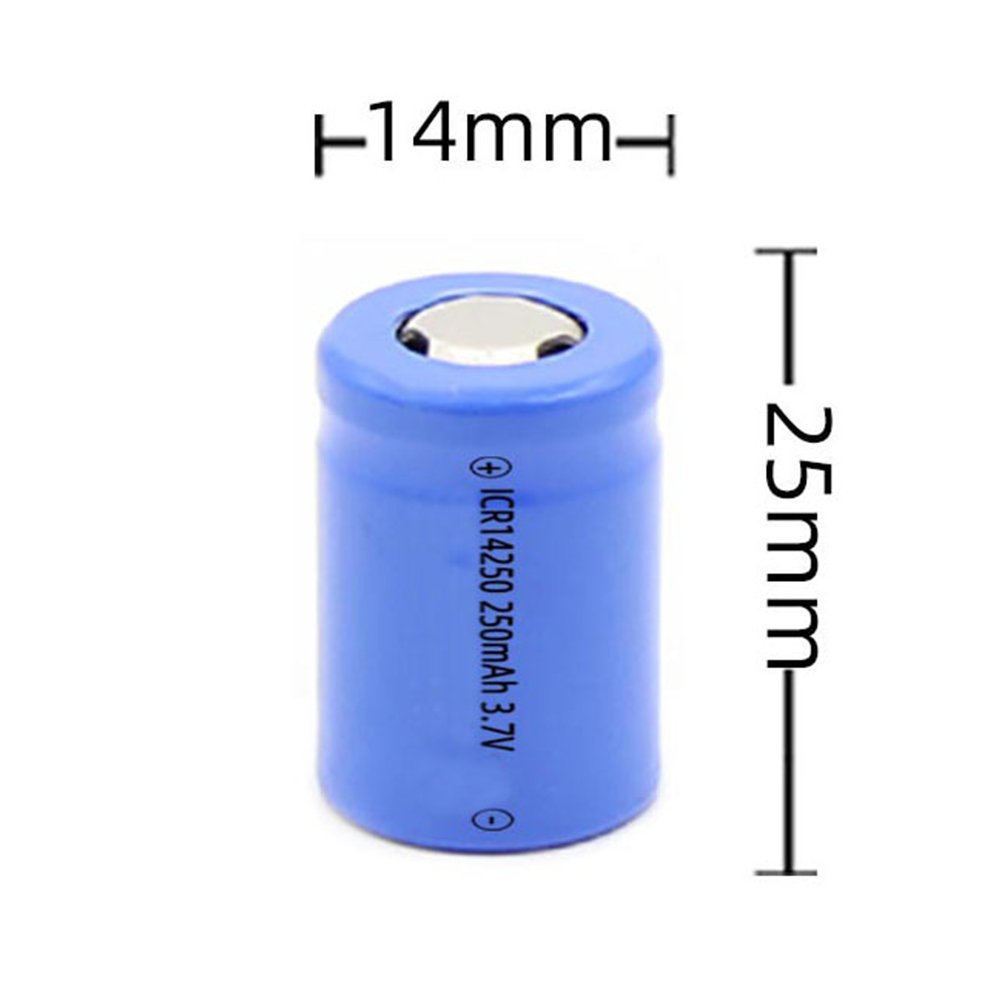
Dimensions: Φ14*25mm
Weight: 9g
Internal Resistance: Less than 70m Ω
Standard Discharge Current: 0.2C (50mA)
Standard Charge Current: 0.2C (50mA)
Max Continuous Discharge Rate: 3C (0.75A)
Max Continuous Charge Current: 1C (0.25A)
Charging Temperature: 0 to 45℃;
Discharge Temperature: -20 to 65℃
Storage Temperature:
- -20℃~25℃: 12 months
- -20℃~45℃: 3 months
- -20℃~60 ℃: 1 month
Key Features – ICR 14250 Battery
🌱 Eco-Friendly & Rechargeable Design
This 14250 lithium-ion battery cell is rechargeable and environmentally friendly, helping reduce disposable battery waste. Unlike primary batteries, it can be charged hundreds of times, significantly lowering long-term operating costs and environmental impact.
🔄 No Memory Effect – Charge Anytime
With no memory effect, the 1/2 AA 14250 battery can be recharged at any state of discharge. Partial charging does not reduce capacity, allowing flexible charging habits without compromising battery lifespan or performance.
📏 Ultra-Compact & Lightweight for Special Size Requirements
Designed in a 1/2 AA (14250) form factor, this lithium-ion cell is small, slim, and lightweight, making it ideal for devices where space is extremely limited. It fits perfectly in custom battery packs and compact electronic designs that cannot accommodate larger cells.
🔋 Stable 3.7V Output Under High Load
Thanks to its high voltage stability, the 14250 3.7V battery maintains consistent output even during high-load (3C discharge) operation. Voltage drop is minimal, ensuring reliable device performance and protecting sensitive electronics.
🕒 Ultra-Low Self-Discharge for Long Shelf Life
With a self-discharge rate below 1% per month, this rechargeable lithium-ion cell retains energy efficiently during storage. It is an excellent choice for backup power, standby devices, and applications that require long storage periods without frequent recharging.
🎯 Typical Applications
-
Medical and healthcare devices
-
Wearable electronics
-
Sensors and measurement instruments
-
Smart meters and IoT devices
-
Industrial and customized electronic equipment
Similar Cylindrical Battery Comparison
14250 Li-ion |
14500 Li-ion |
14650 Li-ion |
CR14250 |
ER14250 |
|
|---|---|---|---|---|---|
| Chemistry | Lithium-Ion (Li-ion) | Lithium-Ion (Li-ion) | Lithium-Ion (Li-ion) | Lithium Manganese Dioxide (Li-MnO₂) | Lithium Thionyl Chloride (Li-SOCl₂) |
| Nominal Voltage | 3.7V | 3.7V | 3.7V | 3.0V | 3.6V |
| Typical Capacity | 200–300 mAh | 500–1000 mAh | 800–1200 mAh | 800–1000 mAh | 1000–1200 mAh |
| Internal Resistance (Typical) | 60–100 mΩ | 50–90 mΩ | 40–70 mΩ | 150–300 mΩ | 200–400 mΩ |
| Size (Diameter × Length) | 14 × 25 mm | 14 × 50 mm | 14 × 65 mm | 14 × 25 mm | 14 × 25 mm |
| Weight (Approx.) | 6–10 g | 18–20 g | 25–28 g | 11–13 g | 13–15 g |
| Cycle Life | 500+ cycles | 500+ cycles | 500+ cycles | Not applicable | Not applicable |
❓ Frequently Asked Questions (FAQ)
Q1: What is the equivalent to a 14250 battery?
Q3: What is the difference between a lithium battery and a lithium ion battery?
Q4: How to tell if a 3.7 V battery is bad?
Q5: How to revive a 3.7 V Li ion battery?
Related Battery
14650 1200mAh 3C Lithium-Ion Cell
AAA 350mAh Lithium Ion Battery Cell
3.2V 14430 400mAh Battery Cell

