
13450 650mAh 5C Lithium Ion Polymer Battery Cell
Summary of 13450 650mAh 5C Lithium Polymer Li Poly Batteries
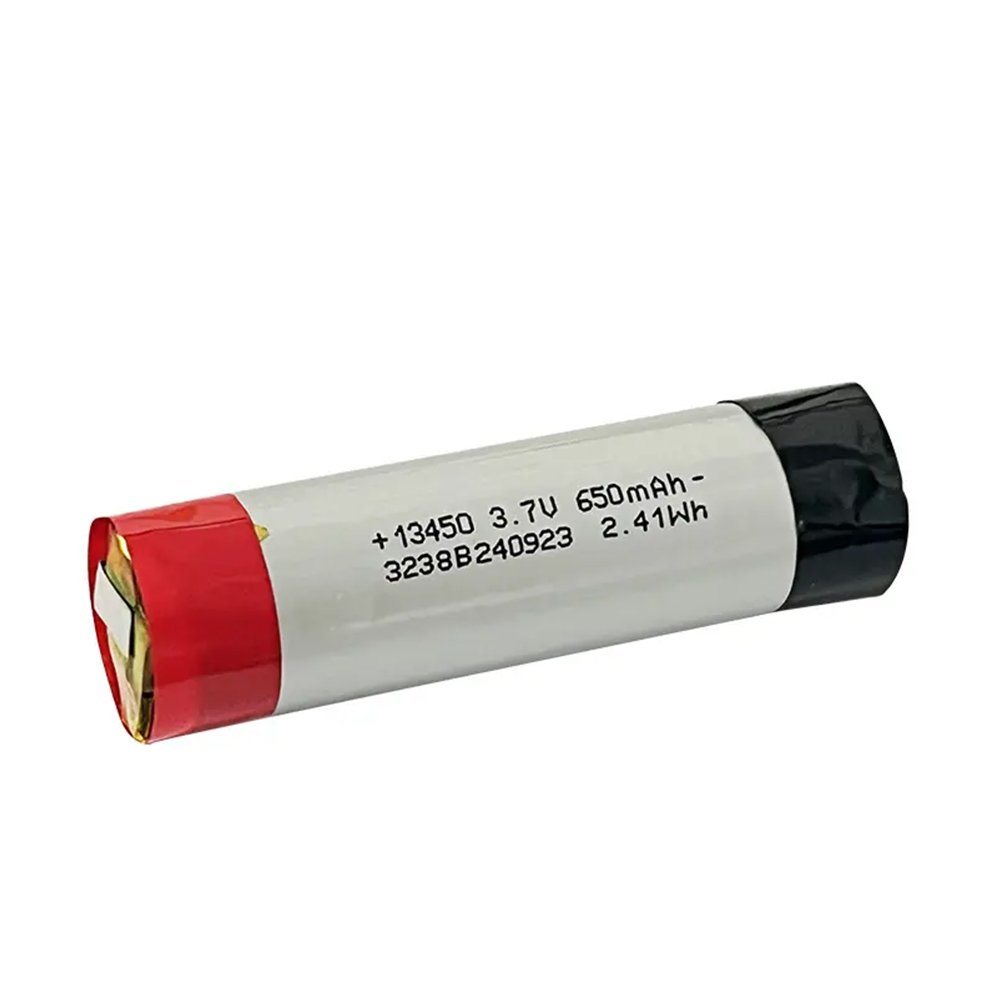
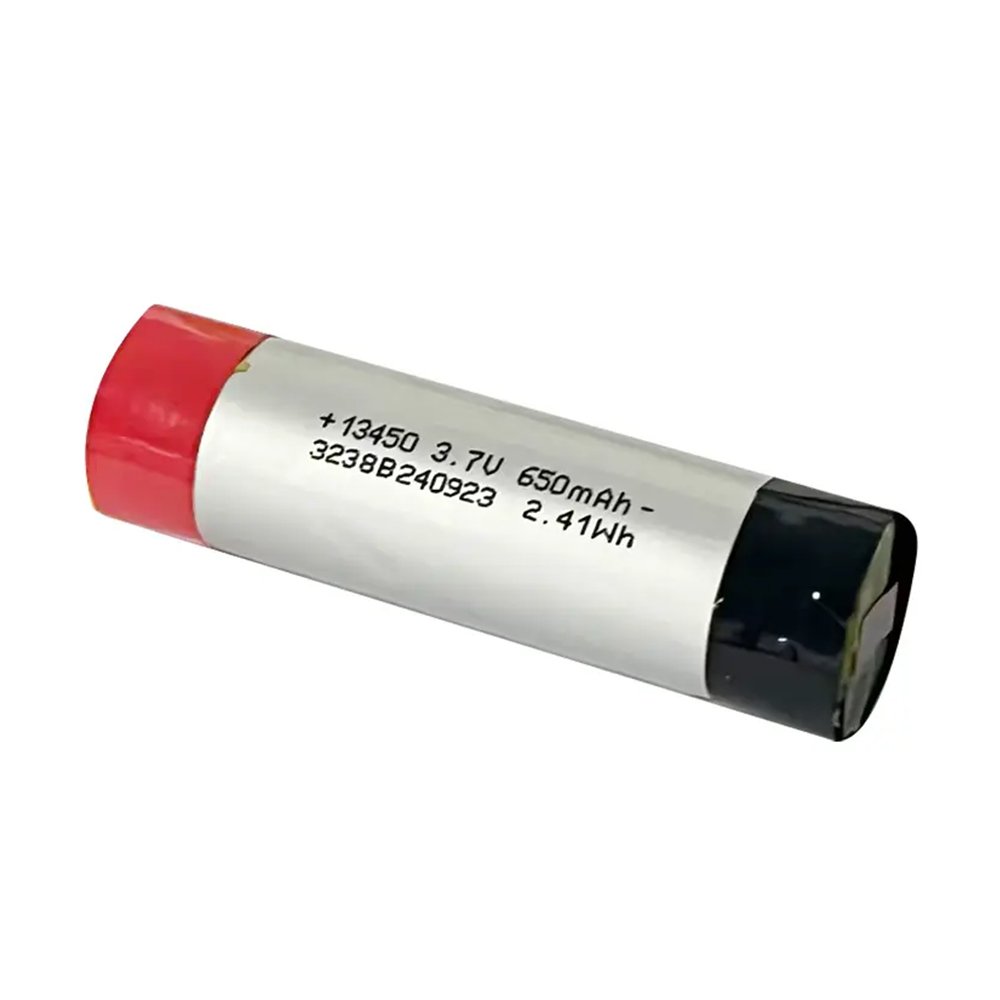
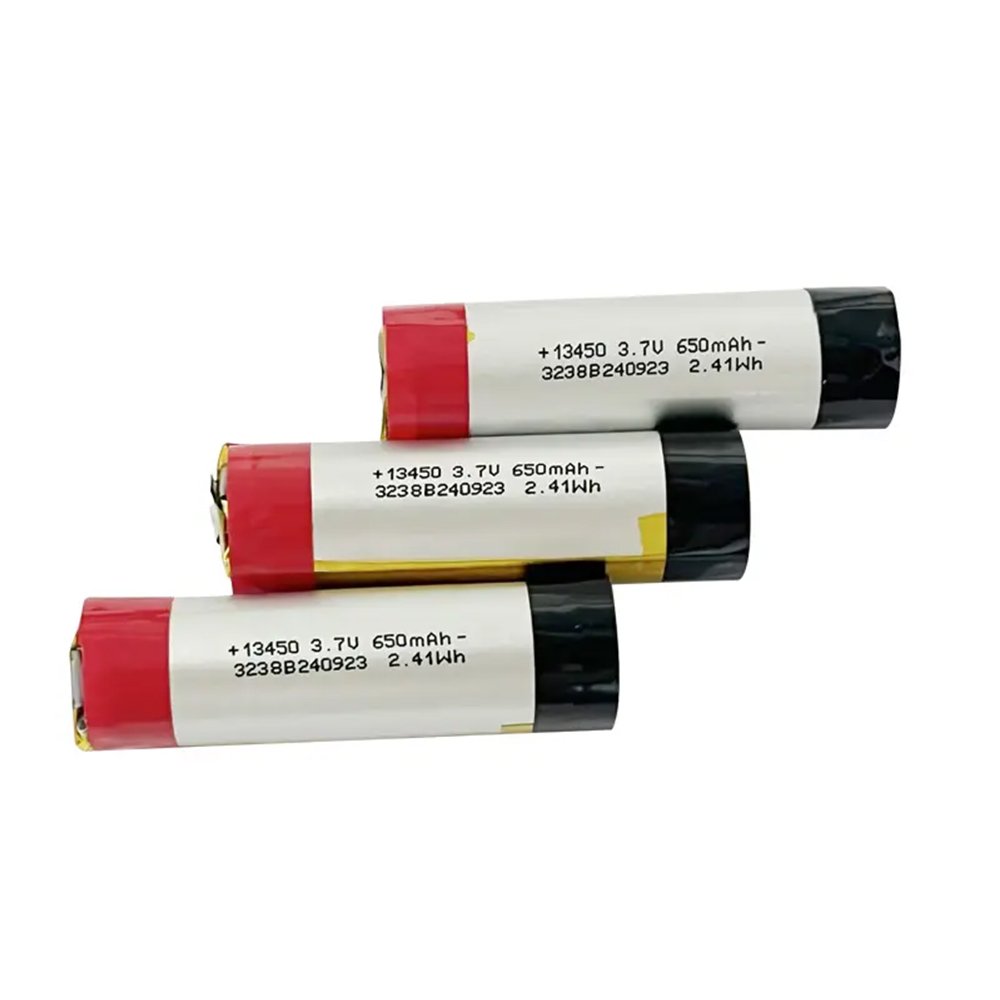
The 13450 650mAh 5C Lithium Ion Polymer Battery Cell is a next-generation cylindrical rechargeable battery designed for compact devices that demand high power output, low weight, and enhanced safety. With an exceptional energy density of up to 171.79Wh/kg, this cell delivers strong continuous discharge performance while maintaining excellent thermal stability and long cycle life. Unlike traditional steel-case lithium-ion cells, this cylindrical lithium polymer battery offers reduced leakage risk, lighter weight, and improved safety under high-temperature or overcharge conditions.
13450 Battery Cylindrical 650mAh Specification
Model: 13450
Rated capacity: 650mAh
Rated voltage: 3.7 V
Energy: 2.405Wh
Energy Density: 171.79Wh/kg
Discharge Cut-off Voltage: 3.0V
Charge Cut-off Voltage: 4.2V
Cycle life: More than 500 cycles
Dimensions: Φ13*45mm
Weight: 14g
Internal Resistance: ≤ 80m Ω
Max Continuous Discharge Rate: 5C
Max Continuous Charge Current: 1C
Charging Temperature: 0 to 45℃;
Discharge Temperature: -20 to 65℃
Storage Temperature:
- -20℃~25℃: 12 months
- -20℃~45℃: 3 months
- -20℃~60 ℃: 1 month
Key Features – 13450 Rechargeable Batteries
⚡ High Energy Density up to 171.79Wh/kg
This 13450 lithium ion polymer cell achieves an energy density as high as 171.79Wh/kg, enabling longer runtime and higher efficiency in space-constrained designs. The advanced polymer electrolyte system allows more usable energy per unit weight compared to conventional cylindrical Li-ion batteries.
🚀 5C Continuous Discharge for High-Power Output
With a 5C continuous discharge rate, this battery cell can deliver stable high current output without significant voltage drop. It is well-suited for applications requiring instant power bursts or sustained high loads. Ideal for motor-driven devices, portable equipment, and power-intensive electronics.
🪶 Lighter Than Steel-Case Cylindrical Batteries
Compared with traditional steel-shell cylindrical batteries, the 13450 lithium polymer cell features a lighter overall structure, helping manufacturers reduce total device weight while maintaining strong mechanical reliability, improve portability and better user experience.
🛡️ Enhanced Safety with Lithium Polymer Technology
Although cylindrical in shape, this cell uses lithium ion polymer chemistry, offering clear safety advantages:
-
Lower electrolyte leakage risk
-
Better thermal stability under high temperature
-
Improved safety performance in overcharge scenarios
This makes it a reliable choice for applications where safety and stability are critical.
🔁 Long Cycle Life Over 500 Deep Cycles
The 13450 650mAh Li-Po battery cell supports 500+ deep charge–discharge cycles, maintaining stable capacity retention over long-term use. This reduces replacement frequency and lowers total cost of ownership for OEM and industrial customers.
🧩 Typical Applications
-
Portable electronic devices
-
Robotics and automation equipment
-
Lightweight electric devices
-
Medical and monitoring instruments
-
Custom battery packs with high discharge demand
❓ Frequently Asked Questions (FAQ)
Q1: What does 5C mean on a LiPo battery?
A 5C rating on a LiPo battery means it can be safely discharged at a current equal to five times its capacity. For example, a 650mAh battery with a 5C rating can deliver up to 3.25A of continuous current.
Q2: What is the 13450 battery used for?
Q3: Which is better, LiPo or Li-ion battery?
Q5: Is LiPo cheaper than li-ion?