

32700 6500mAh 3C LiFePo4 Battery Cell for Solar Energy Storage
Summary of 32700 6500mAh 3C LiFePo4 Battery 3.2V
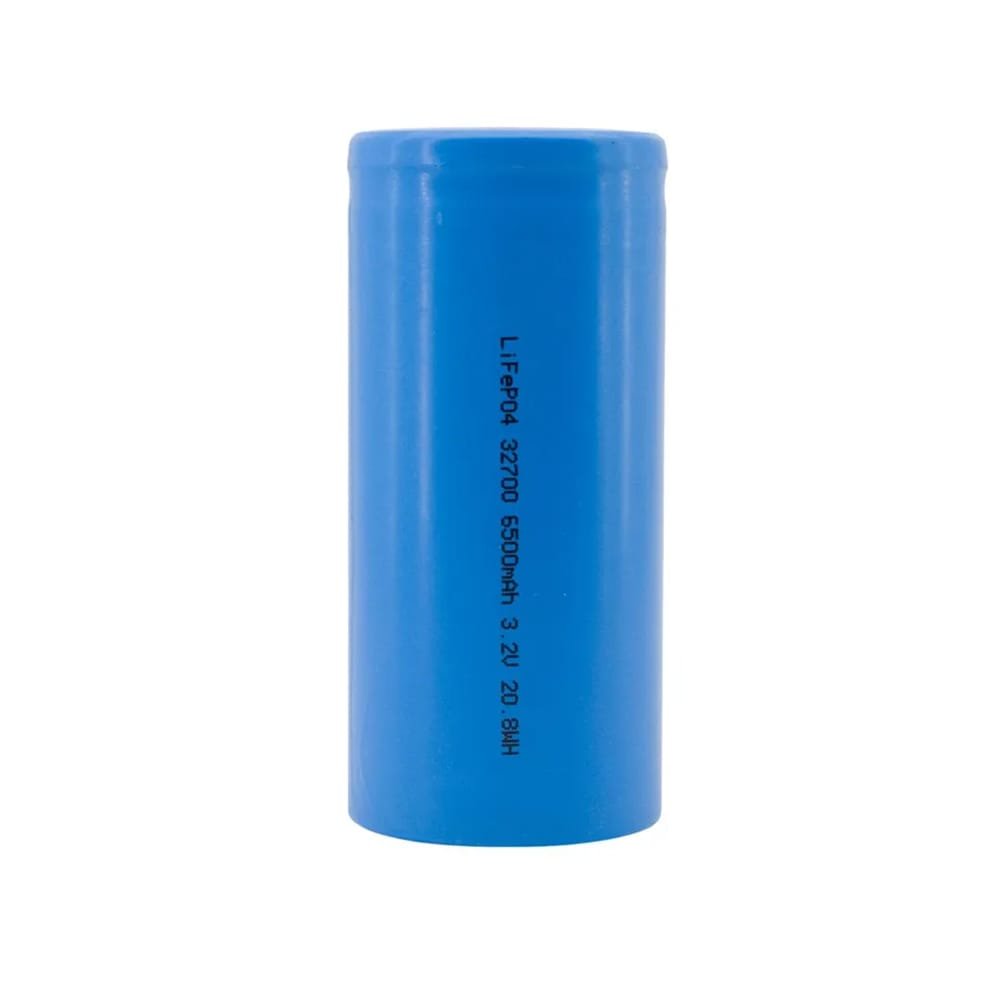
The 32700-format LiFePO4 battery cell is engineered for stationary and distributed energy storage systems. From an engineering and manufacturing perspective, it focuses on measurable performance indicators such as gravimetric energy density (up to 123.81 Wh/kg), cell-to-cell consistency, discharge capability, and voltage stability under load—all critical factors for building reliable multi-series, multi-parallel battery packs in solar and ESS applications.
Request Complete Datasheet for this battery
32700 6500mAh LiFePo4 3.2V Product Specification
Model: IFR32700
Rated Capacity: 6500mAh
Energy: 20.8Wh
Energy Density: 123.81Wh/kg
Minimum Capacity: 6500mAh
Rated Voltage: 3.2V
Discharge Cut-off Voltage: 2.5V
Charge Cut-off Voltage: 3.65V
Cycle Life: More than 4000 cycles
Dimensions: Φ32*70mm
Weight: 168g
Internal Resistance: Less than 10mΩ
Standard Discharge Current: 0.2C (1200mA)
Standard Charge Current: 0.2C (1200mA)
Max Continuous Discharge Rate: 3C (19.5A)
Max Continuous Charge Current: 0.5C (3.25A)
Charging Temperature: 0 to 45℃;
Discharge Temperature: -20 to 60℃
Storage Temperature:
- -20℃~25℃: 12 months
- -20℃~45℃: 3 months
- -20℃~60 ℃: 1 month
Key Features – 32700 Battery 6500mAh
📊 High Energy Density: 123.81 Wh/kg
One of the defining characteristics of this cell is its gravimetric energy density reaching up to 123.81 Wh/kg, which is high for LiFePO4 chemistry in the 32700 form factor. From a manufacturing standpoint, this is achieved through optimized electrode coating thickness, high-utilization active material formulation, and controlled electrolyte filling and formation process.
For solar storage integrators, higher energy density means reduced total pack weight at the same usable energy, improved structural design flexibility and lower transportation and installation load constraints.
🔋 Large Capacity Leadership in 32700 Class
With a nominal capacity of 6500mAh, this cell is currently at the upper end of what is practically achievable in mass-produced 32700 LiFePO4 cells.
Engineering value:
- Longer runtime per cell at the same system voltage
- Reduced parallel strings for a given Ah requirement
- More uniform current distribution in large battery packs
In solar ESS systems, this directly translates into extended discharge duration during low-irradiance periods or peak demand windows.
🔄 Cell Consistency for Series/Parallel Battery Packs
High-capacity cells introduce additional challenges in consistency control. This product is designed with tight internal resistance and capacity deviation control, making it suitable for large-scale series-parallel configurations. Manufacturing controls typically include capacity grading after formation, IR & OCV sorting and aging & re-testing prior to final binning.
For pack assembly, good consistency reduces balancing current stress on the BMS, early capacity divergence and localized thermal hotspots.
⚡ Continuous 3C Discharge Capability
The cell supports continuous 3C discharge, enabling stable high-current output without abnormal voltage sag or excessive heat generation.
Practical implications:
- Suitable for inverters with high surge or ramp loads
- Supports hybrid solar systems with load-following behavior
- Maintains usable capacity under elevated discharge rates
This makes the cell viable not only for low-C-rate energy storage, but also for power-assisted ESS designs.
📉 Voltage Stability Under High Load
A critical but often underemphasized parameter in solar storage is voltage stability. This cell exhibits low voltage drop under high load, which is especially important for inverter efficiency, DC bus stability and BMS protection threshold accuracy
Stable discharge curves reduce nuisance cutoffs and allow deeper, more predictable utilization of stored energy.
🧩 Customization and OEM Support
The cell supports engineering-level customization, including:
- 🔧 Nominal voltage and capacity window adjustment
- 🔧 Discharge rate (C-rate) optimization
- 🔧 Cycle life targeting for specific DoD profiles
- 🔧 PVC sleeve color options
- 🔧 OEM labeling and batch traceability
Such flexibility is essential for system integrators developing differentiated ESS products.
⚠️ Commonly Overlooked Points & Frequent Misconceptions
❗ Energy Density vs. Capacity
Higher mAh does not automatically mean higher Wh/kg. This cell balances both, which is critical for transport-limited installations.
❗ 3C Does Not Mean Unlimited Pulse
Continuous 3C is a thermal and electrochemical design limit. Pulse profiles should still be validated at pack level.
❗ Consistency Matters More Than Peak Specs
In large solar arrays, minor cell-to-cell deviation can outweigh nominal capacity advantages over time.
❗ LiFePO4 Still Requires Proper BMS
Thermal stability does not eliminate the need for accurate voltage, current, and temperature protection.
❓ FAQ – Frequently Asked Questions
Q1: What is the difference between 21700 and 32700?
Q2: Can I use these cells to build a 12V or 24V solar storage bank?
A: Yes. These are individual 3.2V cells. You can connect them in series (S) to increase voltage (e.g., 4S for 12.8V) and in parallel (P) to increase capacity. Always use a BMS (Battery Management System) when building a pack to ensure balanced charging and safety.
Q3: Do these batteries come with studs (screws) or flat tops?
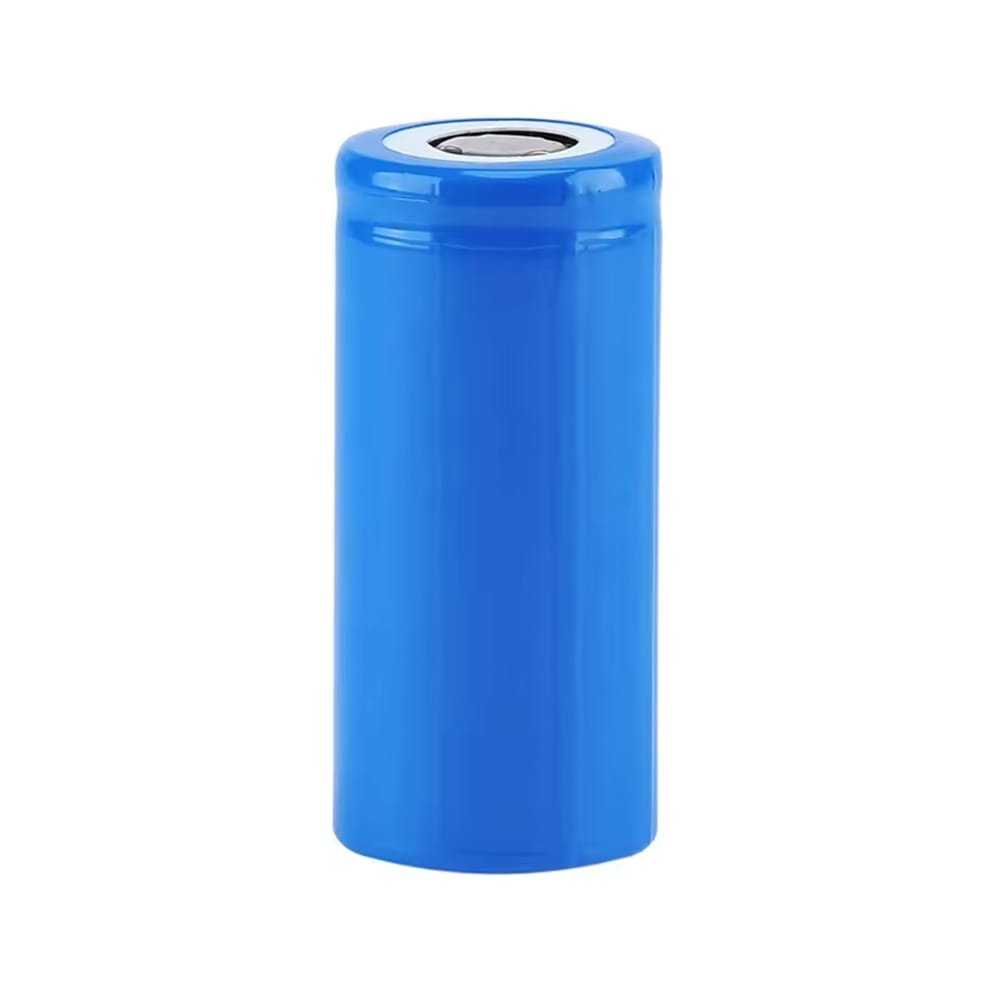
A: Normally it is flat top, but we also offer stud versions per request.
Q5: Do you provide a “Matching Service” for large orders?
📞 Call to Action
If you are evaluating high-capacity LiFePO4 cells for solar energy storage, battery modules, or ESS projects, contact us to discuss technical requirements, customization options, and sample availability.
Looking for complete LiFePO4 battery pack? maybe it helps 72V 20Ah LiFePo4 Battery for Electric Scooter Wheelchair