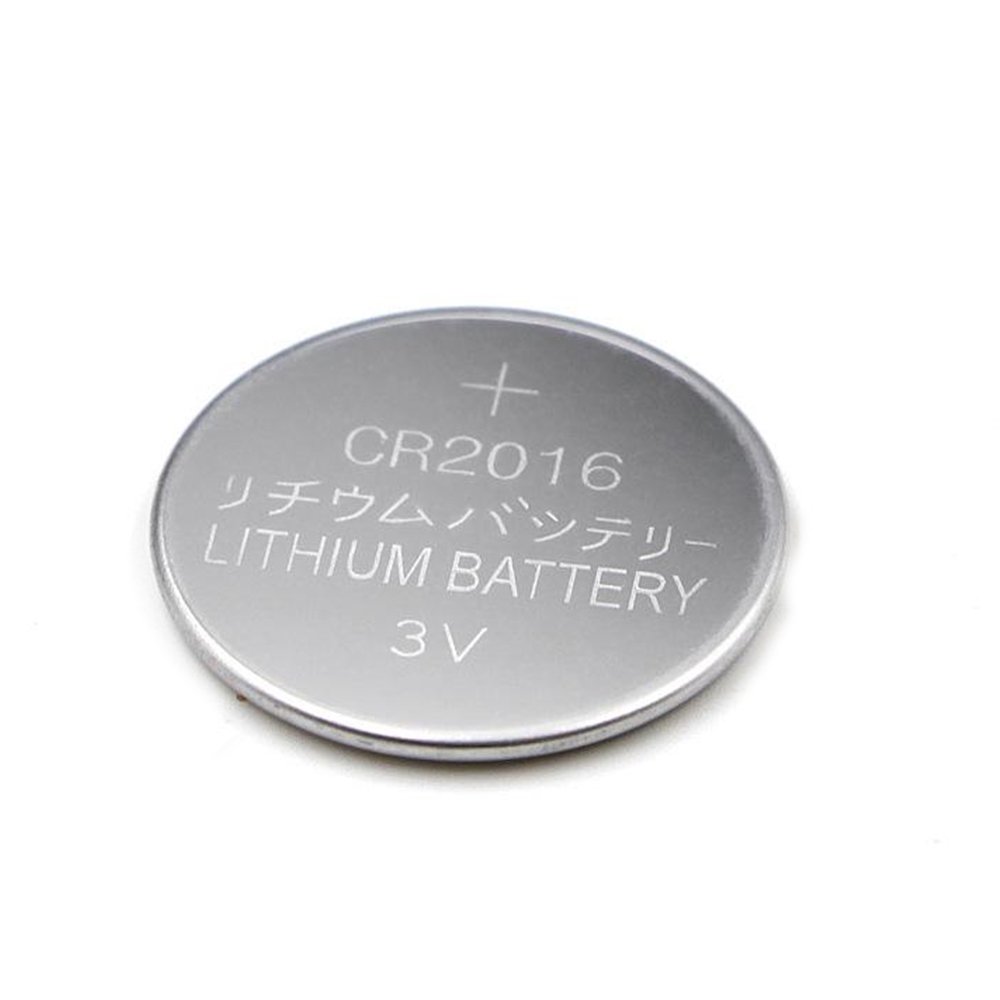
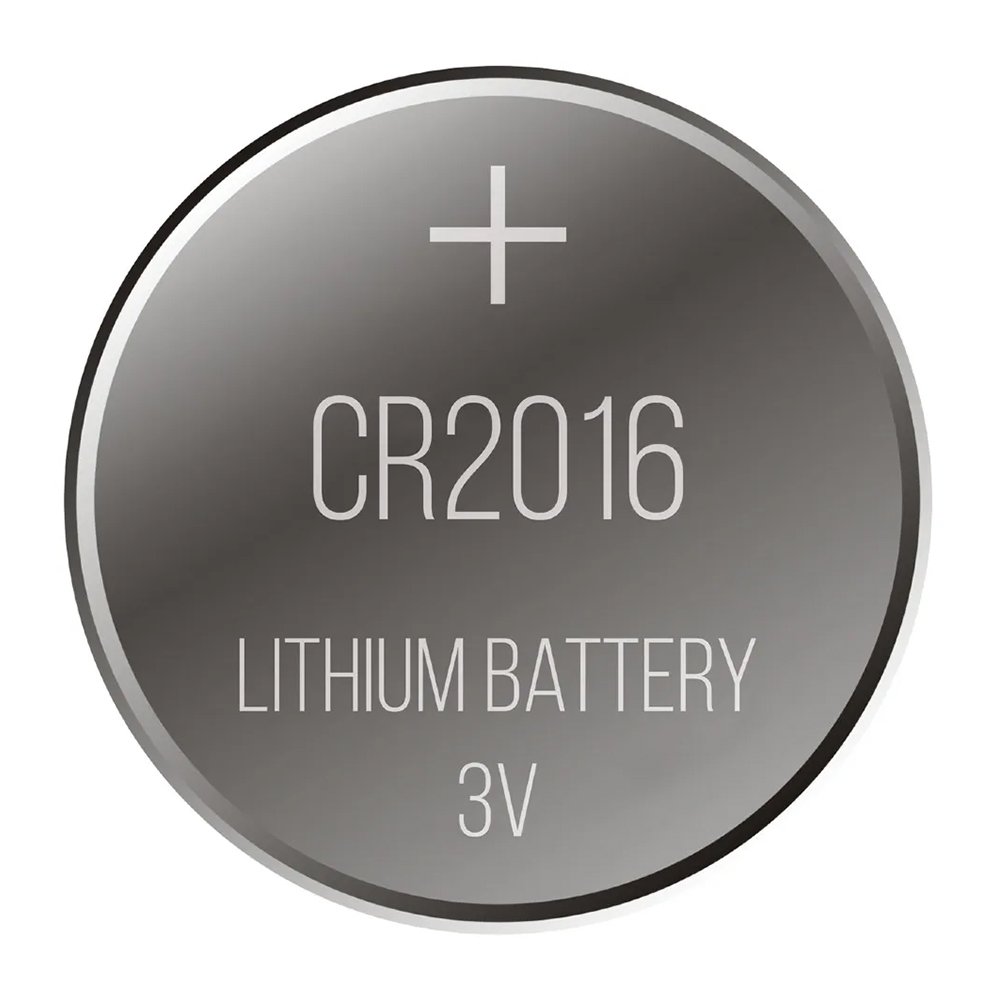
3V Button Lithium CR2016 Li MNO2 Battery
Summary of Lithium CR2016 Battery
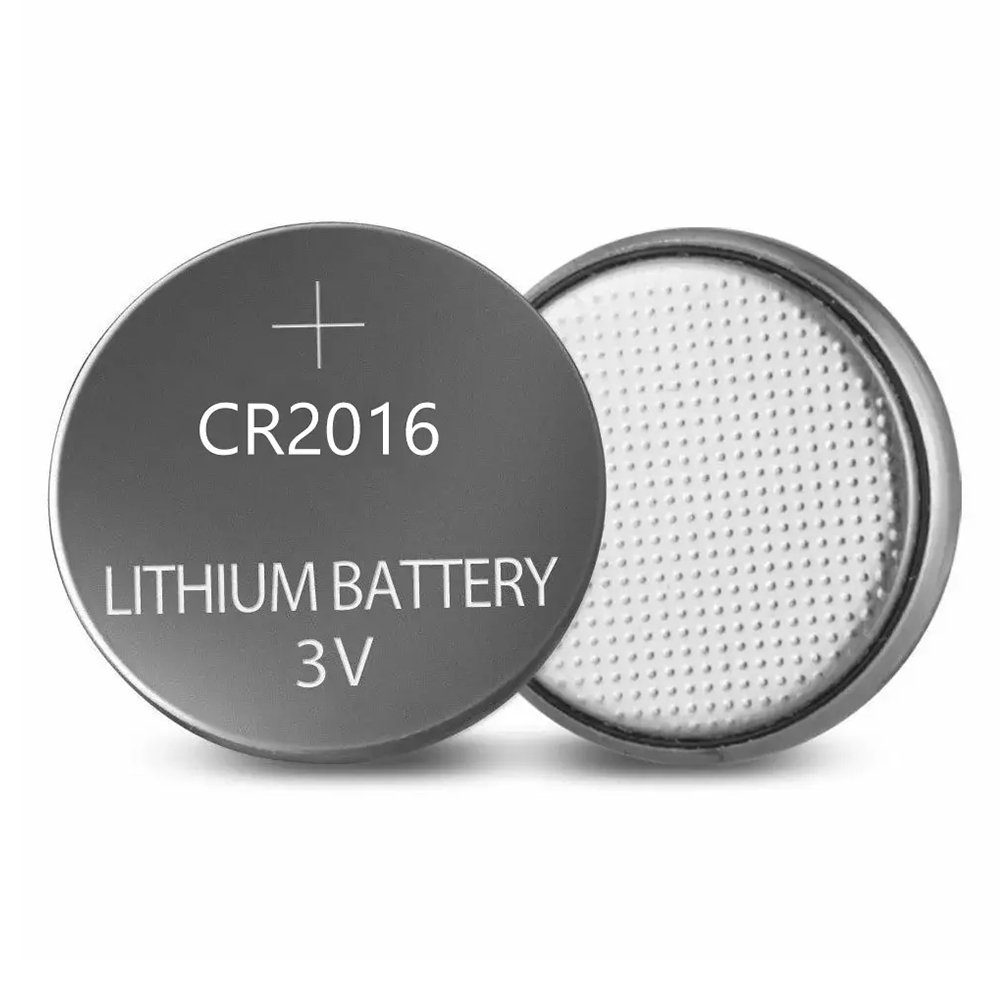
The CR2016 is a 3 V primary lithium button cell based on Li-MnO₂ chemistry, distinguished by its 1.6 mm ultra-thin profile, stable pulse discharge capability, and excellent low-temperature behavior. From a manufacturing and engineering standpoint, CR2016 cells are frequently selected where space constraints, stacked voltage configurations, and intermittent high-current loads coexist, such as compact electronics, low-power wireless modules, and precision instruments.
CR2016 3V Battery Parameters
- Model: Lithium Coin Cell
- Chemistry: Lithium Manganese Dioxide (Li/MnO2)
- Voltage: 3V
- Diameter: 20mm
- Height: 1.6mm
- Typical Capacity: 90mAh
- Energy: 0.27Wh
- Energy Density: 150Wh/kg
- Standard Discharge Current: 0.2mA
- Max Discharge Current: 1mA
- Weight: 1.8g
- Operating Temperature: -20°C to +60°C (-4°F to +140°F)
- Self-Discharge Rate: <1% / year
- Shelf Life: >10 years
- Rechargeable: Non Rechargeable
Key Features – CR2016 3 volt Battery
📐 Ultra-Thin 1.6 mm Profile: Why It Matters
The defining feature of the CR2016 is its 1.6 mm thickness, significantly thinner than CR2025 or CR2032 variants. For designers, thickness—not diameter—is often the limiting parameter. CR2016 directly addresses this constraint.
Engineering implications:
-
Enables low-profile device design without structural compromise
-
Reduces mechanical stress in slim housings
-
Allows multi-cell stacking in height-restricted enclosures
🔗 Stackable by Design: Series Configuration Applications
CR2016 cells are commonly used in series, not in parallel.
-
Two CR2016 → 6 V nominal
-
Three CR2016 → 9 V nominal
Key engineering considerations:
-
Cells must be from the same batch to ensure voltage balance
-
Series stacking is suitable for low-current systems, RTC backup, or logic power rails
-
Parallel use is generally discouraged due to current imbalance risk
Stacking is one reason CR2016 remains relevant despite its lower capacity.
⚡ Pulse Discharge Capability in Real Devices
Although CR2016 is not a high-drain cell, it demonstrates reliable pulse discharge performance when properly applied. Typical pulse scenarios include RF transmission bursts (BLE, RFID wake-ups), MCU wake-sleep transitions and sensor sampling peaks
Engineering note:
Pulse current tolerance is determined by internal resistance and temperature, not just nominal capacity. CR2016 performs best when pulse duration is short and recovery time is sufficient.
❄️ Low-Temperature Performance
CR2016 cells exhibit excellent low-temperature (down to -20°C) behavior compared with alkaline button cells. From a production standpoint, electrolyte formulation consistency is critical here; reputable factories control moisture and solvent purity tightly to maintain cold-weather reliability.
🧩 Typical Application Scenarios
CR2016 is selected when form factor and voltage architecture outweigh raw capacity. Common applications include:
-
Ultra-slim remote controls
-
Real-time clock (RTC) backup
-
Wearable electronics
-
Medical disposables
-
Compact IoT nodes
-
Memory backup in industrial equipment
⚠️ Often Overlooked Points & Common Misconceptions
🔍 Frequently Ignored in Design Reviews
-
Contact pressure: Thin cells are more sensitive to poor spring design
-
Stack tolerance: Housing must control axial movement precisely
-
Pulse testing: Continuous discharge tests do not reflect real use
❌ Common Misunderstandings
-
“CR2016 is just a thinner CR2032” → Incorrect. Internal resistance and capacity scale non-linearly.
-
“Stacking increases current capability” → Series stacking increases voltage, not current.
-
“Any CR cell can replace another” → Mechanical and electrical mismatches often cause failures.
❓Frequently Asked Questions (FAQ)
Q1: Where can I use a CR2016 battery?
A: CR2016 battery is used in slim, low-power electronic devices where space and thickness are limited. Typical applications include car key fobs, remote controls, calculators, wearable devices, and RTC or memory backup circuits.
Q2: Which battery lasts longer, CR2016 or CR2032?
A: The CR2032 lasts longer than the CR2016 because it has a thicker design and significantly higher capacity. In the same device and load conditions, a CR2032 typically provides longer operating time before replacement.
Q3: Which way does a CR2016 battery go in?
Q5: What is the shelf life of a CR2016 battery?
📞 Call to Action
If you are evaluating CR2016 cells for OEM production, custom stacking configurations, or low-temperature applications, our engineering team can review your load profile, mechanical constraints, and batch consistency requirements.
Contact Cestpower to discuss spec validation, sampling, and long-term supply stability.
Related Battery
CR2025 Coin 3V Limn02 Disposable Battery
Non Rechargeable CR2450 Battery 3V Coin Cell for Key FOB
CR1220 Button 3V Lithium Manganese Dioxide Battery