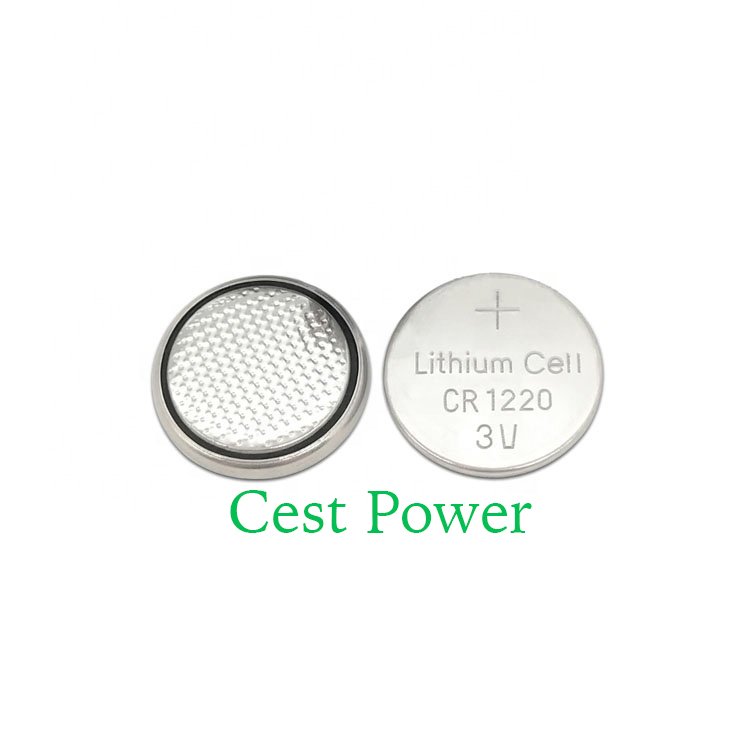
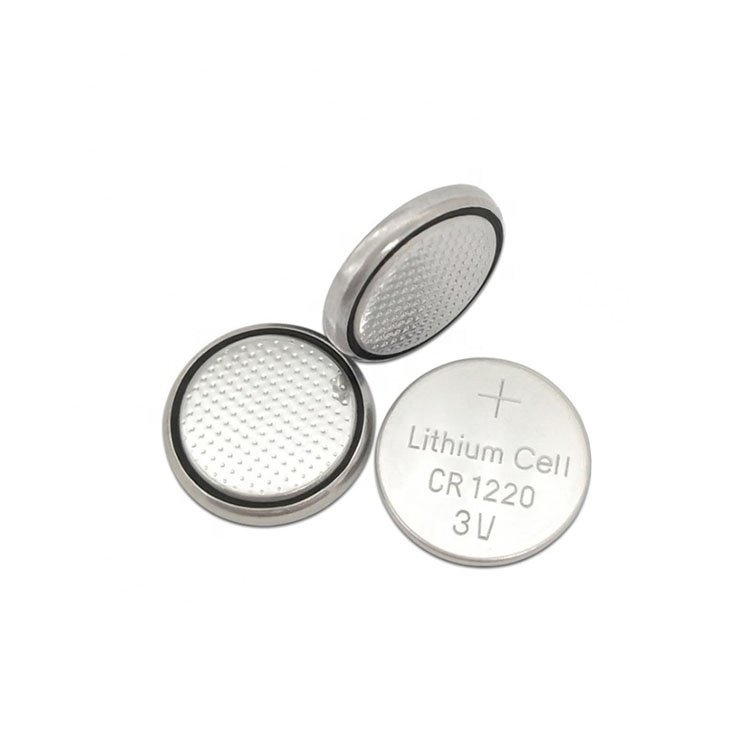
CR1220 Button 3V Lithium Manganese Dioxide Battery
Summary of CR1220 Battery Button 3V
The CR1220 is a compact primary lithium cell designed for long-term, low-current applications where stable voltage, predictable discharge behavior, and long shelf life are critical. From a manufacturing and engineering standpoint, this cell prioritizes electrochemical stability, leak resistance, and compliance over peak power output, making it suitable for memory backup, RTC modules, sensors, and miniature electronics operating across wide temperature ranges.
CR1220 Lithium Cell Parameters
- Model: Lithium Coin Cell
- Chemistry: Lithium Manganese Dioxide (Li/MnO2)
- Voltage: 3V
- Diameter: 12mm
- Height: 2.0mm
- Typical Capacity: 40mAh
- Energy: 0.12Wh
- Energy Density: 150Wh/kg
- Standard Discharge Current: 0.1mA
- Max Discharge Current: 1mA
- Weight: 0.8g
- Operating Temperature: -20°C to +60°C (-4°F to +140°F)
- Self-Discharge Rate: <1% / year
- Shelf Life: >10 years
- Rechargeable: Non Rechargeable
Key Features – CR1220 3V Battery
⚡ Stable 3V Output
CR1220 maintains a stable nominal voltage close to 3.0V throughout most of its usable life.
This is critical for:
-
RTC and CMOS memory
-
Low-power MCUs
-
Devices without voltage regulation stages
Voltage stability minimizes timing drift and data corruption.
🪶 Compact and Lightweight
With its ultra-thin profile, CR1220 is designed for space-constrained PCB layouts, wearables and miniature electronics, and embedded modules requiring minimal mass. Its low weight also reduces mechanical stress in portable devices.
🕒 Long Shelf Life
Typical Li-MnO₂ button cells exhibit very low self-discharge, often suitable for multi-year storage under proper conditions. From a supply-chain perspective, this reduces inventory loss. FIFO pressure, and Long-term replacement costs.
🌡️ Wide Operating Temperature Range
CR1220 cells are engineered to operate across a broad temperature window, making them reliable in outdoor sensors, industrial control backups and consumer electronics exposed to seasonal variation. Performance remains predictable at low drain levels even in cold environments.
🧯 Leak-Resistant Design
Leak resistance is not accidental—it is a manufacturing priority:
-
Controlled internal pressure
-
Stable cathode material
-
Conservative electrolyte formulation
This protects both the device and surrounding components.
♻️ RoHS and REACH Compliant
From a regulatory standpoint, CR1220 batteries are manufactured to comply with RoHS (Restriction of Hazardous Substances) and REACH chemical compliance requirements. This simplifies import, integration, and downstream certification for OEM customers.
🏭 Typical Applications
CR1220 is commonly used in:
-
⏱️ Real-time clock (RTC) backup
-
💾 CMOS and memory retention
-
📟 Small medical and diagnostic devices
-
📡 Wireless sensors and transmitters
-
🎮 Compact consumer electronics
It is not intended for high-drain or pulse-load applications.
⚠️ Often Overlooked Points & Common Misconceptions
❌ “All 3V Button Cells Are Interchangeable”
Different lithium button cells vary significantly in:
-
Capacity
-
Internal resistance
-
Thickness
Substituting CR1220 with a thicker or alkaline cell can cause mechanical or electrical failure.
❌ “Higher Capacity Means Better for Any Use”
CR1220 is optimized for low continuous current, not peak discharge. Using it in pulse-heavy applications may result in voltage drop despite remaining capacity.
❌ “Shelf Life Equals Service Life”
Long shelf life does not mean infinite operating life. Actual service life depends on load current, ambient temperature, and cut-off voltage requirements
❌ “Rechargeable Alternatives Are Drop-In Replacements”
Rechargeable coin cells often have lower nominal voltage and different discharge curves. This can lead to malfunction in circuits designed specifically for 3.0V primary lithium cells.
❓Frequently Asked Questions (FAQ)
Q1: What does CR stand for in coin batteries?
Q2: Can I use CR2032 instead of CR1220?
Q3: How long does a CR1220 battery last?
Q4: Are CR and LR batteries the same?
Q5: What is a CR1220 battery used for?
Related Battery
3V Button Lithium CR2016 Li MNO2 Battery
Lithium CR2032 Battery 230mAh 3V

